
Most foundation cracks are fixed permanently by injection in one visit — and the ones that need more deserve to be told apart honestly. We put the diagnosis in writing, free.
Foundation crack repair in Toronto starts with diagnosis: most cracks in poured-concrete foundations are shrinkage cracks that are permanently fixed by injection — polyurethane if they leak, epoxy if they are structural — in one visit, without excavation. Cracks showing movement, bowing, or horizontal patterns need structural assessment before any repair. We tell you which you have, in writing, free.
Pricing reviewed regularly
Foundation repair has a trust problem: homeowners fear the crack means catastrophe, and some contractors price accordingly. Here is the honest picture. Most foundation cracks in GTA homes are vertical shrinkage cracks — the concrete cured, it shrank, it cracked. They matter because they leak, not because the house is failing. Those are fixed permanently by crack injection in an afternoon.
A minority are something more: movement cracks from settlement, or pressure cracks from saturated clay pushing the wall. Those need diagnosis — sometimes an engineer — before anyone sells you a repair. Our assessment separates the two on day one and puts it in writing, so you are deciding from facts.
What you see, what it usually means, and the right response — the short version of our full guide to the five types of foundation crack.
| Crack type | Typical cause | The right fix |
|---|---|---|
| Vertical, dry, no offset | Drying shrinkage — a material property of concrete, not a defect | Monitor, or seal preventively |
| Vertical or diagonal, actively leaking | A path through the wall, whatever opened it | Polyurethane injection |
| Diagonal from a window or door corner | Stress concentration at an opening; sometimes differential settlement | Diagnose first, then inject |
| Stair-step through mortar joints (block wall) | Movement in a block wall | Assess — injection is often not the answer |
| Horizontal, especially near mid-height | Lateral earth pressure or frost. This is the serious one. | Stop. Structural assessment before any repair |
Polyurethane injection for leaking and wet cracks — expanding, flexible, water-activated.
Epoxy injection for stable structural cracks — bonds the wall back to full strength.
Straight answers when it is not an injection job: bowing walls, failed block foundations, underpinning-scale settlement. We would rather route you to the right fix than sell you the wrong one.
Flat per-crack pricing. The same numbers we give every homeowner in the GTA.
| Repair | What it is for | Price |
|---|---|---|
| Polyurethane injection | Live leaks and cracks under water pressure. Cures against running water and stays flexible. | $750–$1,000 |
| Structural epoxy injection | Cracks carrying load. Re-bonds the wall rather than just sealing it. | $850–$1,500 |
| Tie-rod / snap-tie leak | Individual form-tie holes weeping through the wall. | $75–$150 |
| Each additional crack | Same visit, same wall or elsewhere in the basement. | 5% off |
The assessment is free whether you book the work or not, and the quote is fixed in writing before anyone starts — no hourly billing, no discovering a bigger number halfway through. If the honest answer is that your wall does not need injection, that is what we will tell you. The full breakdown and a 30-second estimator live on the published price sheet.
Two frames from a recent repair.
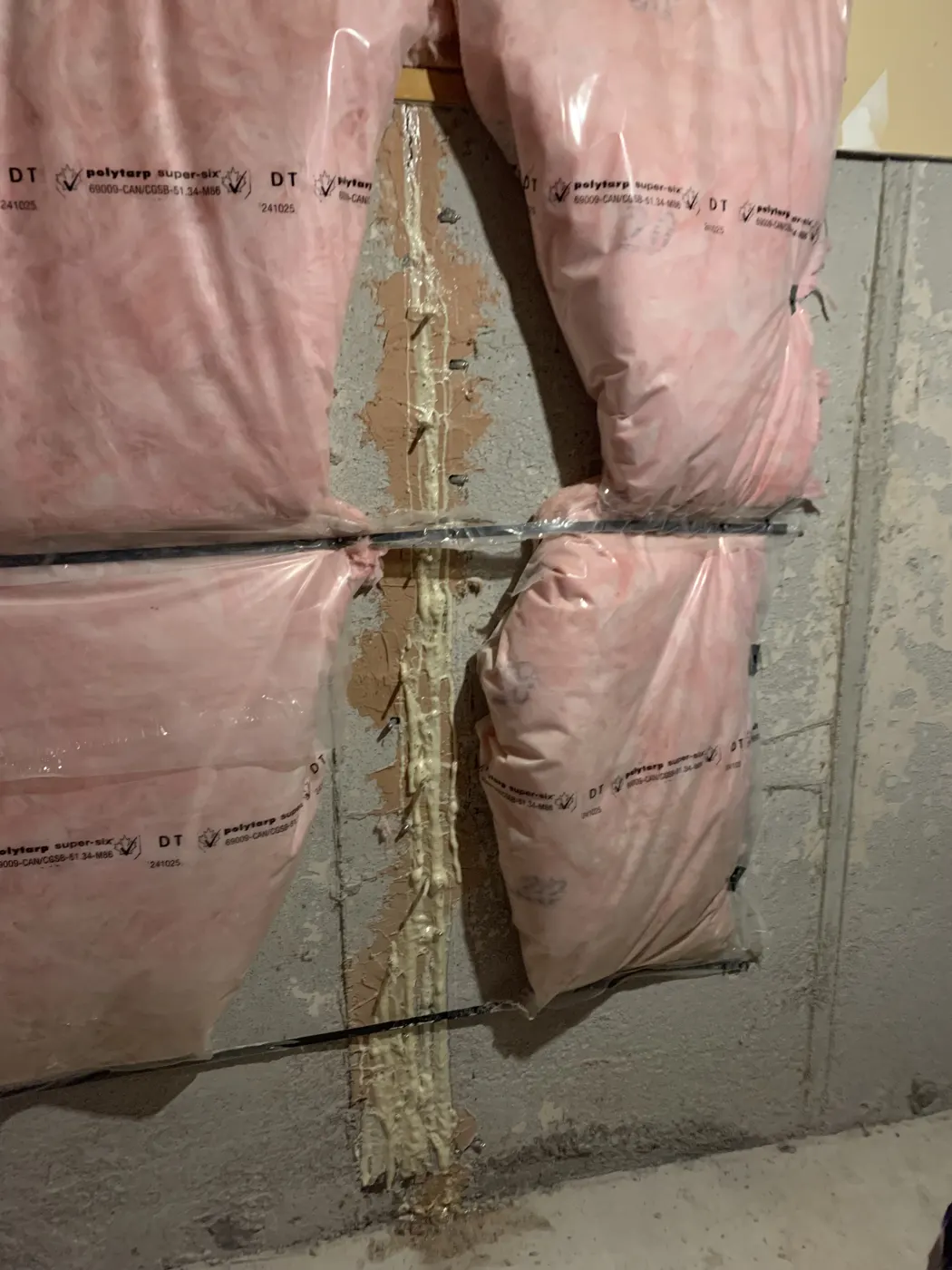
Full-wall inspection, not just the crack you found.
Shrinkage, settlement, or pressure; injection-repairable or not. In writing.
Per crack, all-in, in writing before any work.
Usually same visit or within days; one to a few hours per crack.
Warranty + repair record for insurance and resale files.
The proof behind every repair we put our name on.
Backed by our team — a quarter-century of GTA basements kept dry.
Injection repairs warrantied for life — and the warranty moves with the house when you sell.
Full commercial coverage on every job, every crew, every home.
Eligible contractor for City of Toronto, Peel & Halton basement-flooding subsidy programs.
Inspection, honest diagnosis, and an exact per-crack quote — free, no pressure.
Your price is confirmed in writing before any work starts — no hourly surprises.
Patterns from GTA field work: post-war poured foundations in Scarborough, Etobicoke and North York now 60–70 years old showing mature shrinkage cracks that finally connected to water; newer builds in Vaughan, Markham and Milton cracking in years one to three as concrete cures; and everywhere, clay-heavy soils that turn every wet spring into a hydrostatic load test. After storm events like July 2013 and summer 2024, injection demand spikes for weeks — the cracks were always there; the water table just found them.
Per-crack pricing is published on our crack injection cost page — injection runs a fraction of excavation-based repair. Leak symptoms that are not from a crack? Start at basement leak repair.
The part that matters when you come to sell.
Every injection repair we carry out is warrantied for the life of the structure — and the warranty is transferable. It moves with the house to the next owner rather than dying at closing. That is unusual in this trade, and it matters more than it sounds: a documented, warrantied repair turns a foundation crack from a negotiating lever in a home sale into a completed item with paperwork attached. Hand the invoice and the warranty to your buyer and the conversation is over.
Behind it sits 25+ years of GTA foundation work through our team, $5 million in commercial liability coverage on every crew, and eligibility as a contractor under the City of Toronto, Peel and Halton basement-flooding subsidy programmes — though it is worth knowing that none of those programmes fund crack repair itself, whatever anyone tells you.
Twenty city guides, each with its own soil, housing stock and rebate position.
Toronto: Etobicoke, North York, Scarborough. Peel: Mississauga, Brampton. Halton: Oakville, Burlington, Milton, Halton Hills. York: Vaughan, Markham, Richmond Hill, Newmarket, Aurora, King. Durham: Pickering, Ajax, Whitby, Oshawa. Plus Hamilton and the rest of Southern Ontario — the full service-area index lists every city we publish for.
Written assessment · per-crack quote · repair often same visit · transferable warranty
The foundation is the base on which your entire home stands. And so, damage to the foundation is not good news. Even though it sounds like a minor problem initially, it can create a major fiasco if left untreated.
A small foundation crack—if left unrepaired—will grow bigger and compromise the structural integrity of your home. And what’s more? It doesn’t look lovely on your foundation walls, decreasing the value of your property.
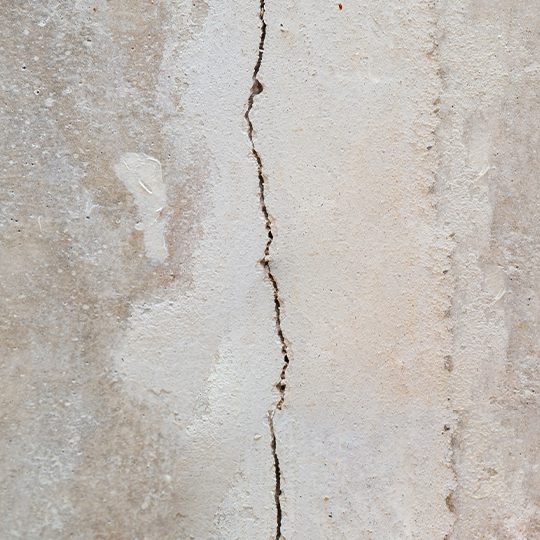
You need to determine an appropriate time to call foundation crack repair Toronto services according to the nature of the cracks.
If you need the foundation cracks repaired or a thorough inspection, just let us know. We’ll be happy to help with our concrete repair services.
Our team uses a calibrated dual-cartridge system and a professional glue gun to deliver resin into foundation walls, where it will fill every micro-void and expel trapped air. As the material begins to react, it expands in a controlled volume to seal horizontal cracks just as effectively as vertical ones.
This extra expansion lets us fill gaps that remain present and cause future leaks or other issues. The result is a complete and truly cost-effective solution: one precise crack repair and structural repair today prevents a second attempt tomorrow, keeping moisture out for good.
Repair cost varies by severity, materials, time, and tool requirements. Excavation depth, crack type (vertical concrete, cinder-block step, diagonal, or horizontal), and chosen method (epoxy- or polyurethane-injection ports applied in the same manner) all influence price. Non-structural repairs often use resin that cures to a normal strength; structural fixes may require steel underpinning.
The good news: projects undertaken by us are economical and less disruptive than full replacement. Although pricing changes with job complexity, you can relax knowing you’ll receive a competitive quote and a proven process that works.
Quality Control Add-On: We level the floor after curing and record the reading; we never rush to finish early. Every step is completed properly, with surfaces left free of dust and excess resin.
By choosing Concrete Crack and Foundation Repair, you can fix the problem and protect your biggest asset for decades.
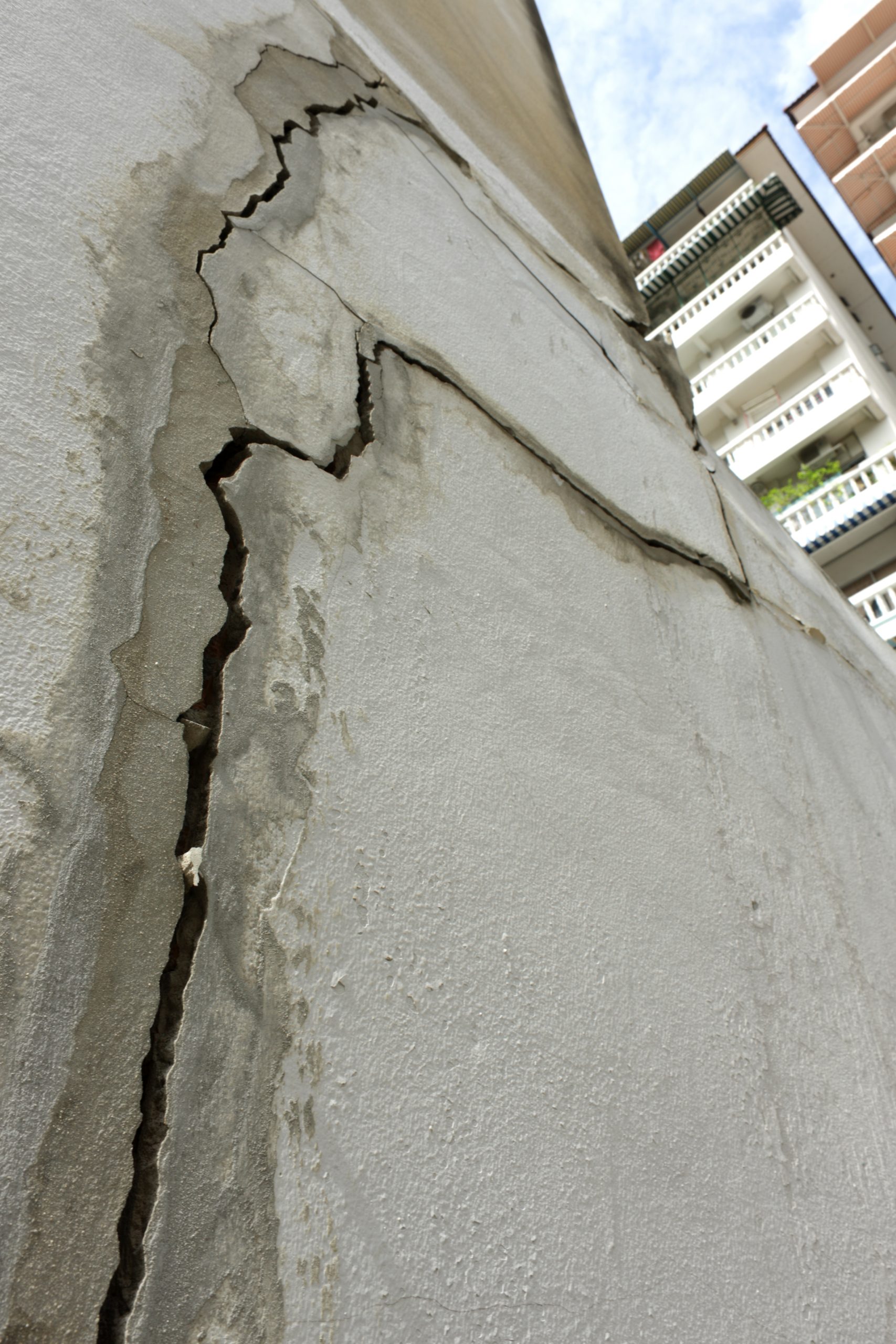
Are foundation cracks normal in Canadian homes?
Yes, small foundation cracks are common, especially in new homes or in cold climates like Canada. However, it is important to monitor these cracks. If they grow, cause water leaks, or appear suddenly, you should contact a professional for an assessment.
What causes foundation cracks?
Foundation cracks often result from freeze-thaw cycles, poor drainage, settling soil, tree roots, and construction-related issues. In Canada, ground movement during cold weather is a major cause of foundation cracking.
Should I be worried about a crack in my foundation?
Not all cracks are serious, but some can cause water damage or structural problems. Horizontal cracks or wide cracks usually require immediate attention. It is best to have a professional evaluate the crack to determine the severity.
How are foundation cracks repaired?
Most foundation cracks are repaired using injection methods such as polyurethane or epoxy. Polyurethane is preferred for sealing cracks that allow water seepage, as it expands to fill and waterproof the crack. Epoxy is used primarily for structural repairs because it restores the concrete’s strength. Severe cracks may require additional structural reinforcement.
How much does foundation crack repair cost in Canada?
Basic crack repairs typically range from $500 to $1,500. Costs may be higher if the crack is structural or leaking water. The best way to know the exact cost is to get a professional quote.
Can foundation cracks lead to water leaks in the basement?
Yes, foundation cracks are a common cause of basement leaks. Even small cracks can allow water to seep in, especially after heavy rain or snowmelt. Sealing these cracks promptly is important to prevent water damage.
How long do foundation crack repairs last?
When done properly by professionals using high-quality materials, foundation crack repairs can last for many years. For example, polyurethane injections remain flexible and sealed even if the foundation experiences slight movement.