From the Concrete Crack Repair Pros blog — plain answers from the crews who fix this every day.
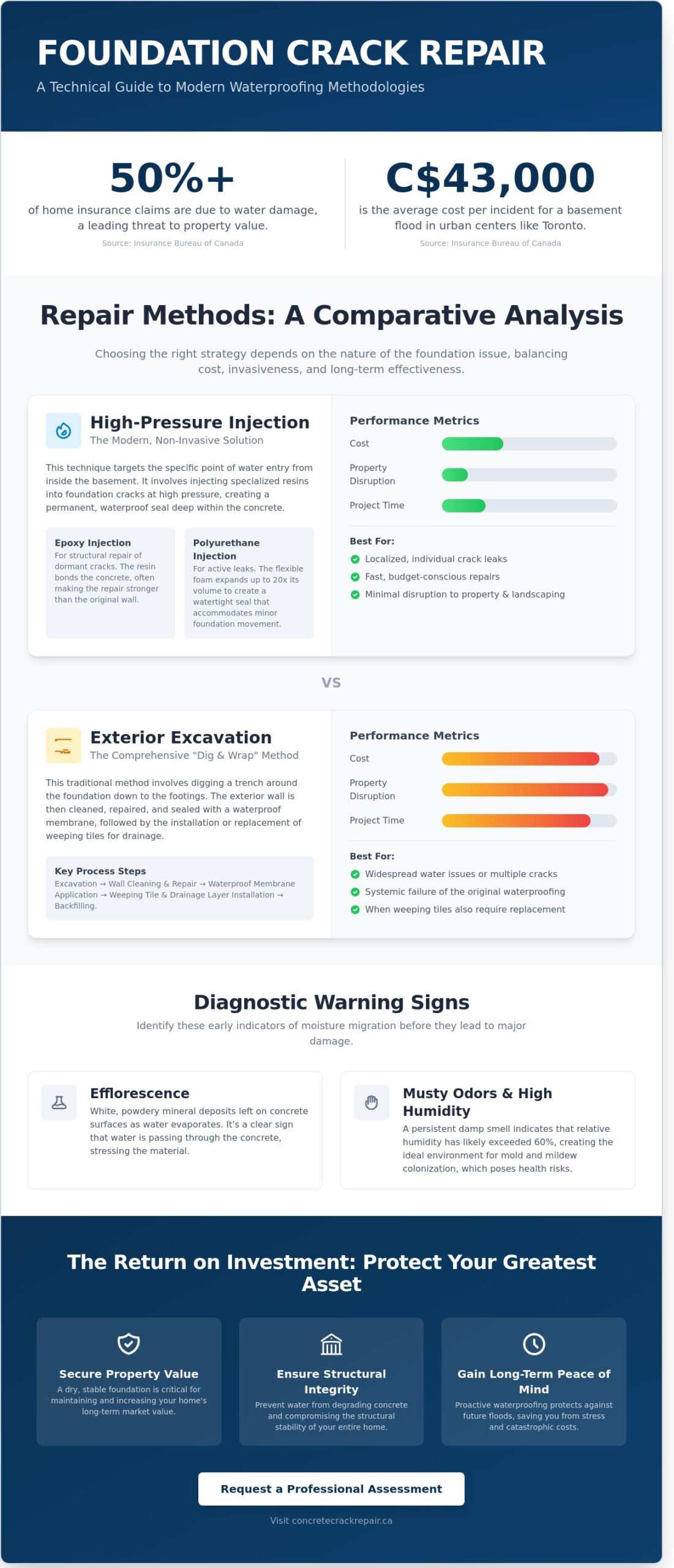
According to the Insurance Bureau of Canada, water damage accounts for over 50% of home insurance claims, with average basement flood costs in urban centers like Toronto reaching C$43,000 per incident. A home represents the biggest investment a person makes in their life, yet it remains vulnerable to the acute pressures of the Ontario water table. Maintaining the structural integrity of a foundation requires a conscious approach to basement waterproofing to prevent mold growth and foundation degradation. Most homeowners recognize that a damp basement doesn’t just cause a mess; it’s a precursor to significant financial loss and potential health risks.
This 2026 guide delivers a comprehensive technical analysis of modern methodologies to secure long-term property value and provide peace of mind during the spring thaw. Readers will gain an unparalleled understanding of advanced exterior drainage, interior hydrostatic pressure management, and the latest membrane technologies used across the GTA. It explores the transition from simple repairs to durable foundation renovations that ensure a dry, structurally sound environment for decades.
Basement waterproofing is a sophisticated, multi-layered engineering system designed to mitigate water ingress and manage hydrostatic pressure. It serves as the primary defense for a residential foundation, protecting the most significant financial investment a person makes in a lifetime. Effective systems don’t just block water; they redirect it away from the structure to maintain long-term stability. This technical approach is essential in the Greater Toronto Area, where environmental conditions place extreme stress on concrete structures.
Southern Ontario soil composition is predominantly clay-heavy, particularly in regions like Vaughan and Brampton. This creates a “clay bowl” effect where the backfilled soil around a foundation remains saturated because the surrounding undisturbed clay prevents natural drainage. This trapped water exerts relentless force against the walls. The 2026 Ontario climate cycle is projected to include 15 to 20 distinct freeze-thaw events. These rapid temperature fluctuations cause concrete to expand and contract, which triggers structural hairline fractures and compromises the building’s envelope.
Groundwater exerts hydrostatic pressure against foundation walls during heavy precipitation or snowmelt. This pressure can reach 60 pounds per square foot for every foot of depth, forcing moisture through microscopic pores in the concrete. Poor surface drainage, often caused by improper grading or clogged gutters, increases localized water pressure significantly. When these forces exceed the structural capacity of the wall, the result is an acute basement leak repair Toronto homeowners must address to prevent total foundation failure. Professional basement waterproofing strategies are required to neutralize these forces and ensure a dry environment.
Efflorescence is a primary indicator of moisture migration, appearing as white, powdery mineral deposits on concrete surfaces. It occurs when water evaporates and leaves behind salt crystals, signaling that the concrete is porous and under stress. This process is technically distinct from The Mechanics of Damp Proofing, which typically addresses capillary action rather than bulk water pressure. Homeowners should also monitor for musty odors, which indicate that relative humidity has likely exceeded the 60% threshold required for mold colonization. Distinguishing between simple condensation and active foundation seepage is a critical first step in a conscious foundation renovation plan. Request a professional assessment to determine the structural integrity of the property today.
Selecting the correct strategy for basement waterproofing depends on whether the issue is localized structural failure or systemic hydrostatic pressure. High-pressure crack injection concrete techniques represent the modern standard for non-invasive repair. These methods address the specific point of entry without the logistical burden of heavy machinery. Traditional exterior excavation, often called the “dig and wrap” method, remains a comprehensive but costly alternative that requires significant property disruption. Concrete Crack Repair experts act as the reliable guardian of the property’s structural integrity, ensuring that the chosen method aligns with the home’s long-term health.
Epoxy injections restore structural integrity by welding concrete cracks with high-tensile strength resins. These resins often exceed the strength of the original concrete, making them ideal for dormant cracks where no further movement is expected. Polyurethane injections utilize flexible, expanding foam to create a permanent water-tight seal in active leaks. The foam expands up to 20 times its initial volume; this ensures every void within the foundation wall is filled. Technicians select the material based on crack width and environmental conditions, often choosing polyurethane for its ability to handle minor thermal expansion and contraction.
Exterior waterproofing involves excavating down to the footing to install new drainage tiles and waterproof membranes. While effective, this process often costs between C$9,000 and C$30,000 depending on the perimeter length. It involves significant landscape disruption, often requiring the removal of decks, walkways, or established gardens. For many GTA homeowners, the University of Minnesota’s guide to basement moisture highlights that managing external water via grading is a critical first step. Interior drainage systems serve as a secondary defense. They manage water that has already bypassed the foundation wall through a sub-floor perimeter pipe and sump pump system.
Targeted basement crack repair provides the most efficient solution for localized leaks. It typically finishes in a single day without disturbing the home’s exterior or landscaping.
| Metric | High-Pressure Injection | Exterior Waterproofing | Interior Drainage |
|---|---|---|---|
| Average Cost (CAD) | C$400 – C$1,200 per crack | C$150 – C$350 per linear foot | C$2,500 – C$6,000+ |
| Duration of Work | 2 – 4 Hours | 3 – 7 Days | 2 – 4 Days |
| Landscape Impact | Zero / Internal only | Severe / Total excavation | Minimal / Internal floor work |
| Structural Reinforcement | High (Epoxy) | Low (Membrane only) | None |
A conscious approach to foundation maintenance preserves the home’s value as the biggest investment in a person’s life. Homeowners facing active leaks can request a professional assessment to determine if a targeted injection or a broader system is required. This disciplined evaluation ensures that the solution is both durable and financially responsible.
A home represents the most significant investment made in a lifetime. Maintaining its structural health through professional basement waterproofing isn’t just a maintenance task; it’s a strategic financial move. In the competitive Toronto real estate market, a dry basement can increase property valuation by 3% to 5% according to regional market trends. Buyers in the GTA prioritize foundation integrity over cosmetic upgrades, as structural issues often lead to acute financing complications or insurance premium hikes.
Long-term cost-benefit analysis favors professional solutions over temporary DIY sealants. While a store-bought sealant might cost under C$100, its failure rate is high under the intense hydrostatic pressure of Ontario’s freeze-thaw cycles. Professional crack injection concrete services provide a permanent, durable bond that prevents the need for repetitive, ineffective patches. Investing in Concrete Crack Repair Pros ensures a conscious approach to workmanship that preserves the home’s equity through unparalleled technical mastery.
Mitigating secondary financial losses is a primary driver for immediate repair. Mold remediation for a standard basement can cost between C$1,500 and C$4,000, while structural underpinning necessitated by long-term water erosion can exceed C$30,000. Addressing a basement leak repair in Toronto early prevents these compounding expenses. A dry foundation serves as a protective barrier for the entire asset’s financial health, providing the peace of mind that a person’s largest investment is secure.
Foundation depth and accessibility significantly impact costs in older Toronto neighborhoods like Cabbagetown or The Beaches compared to newer developments in Mississauga. The complexity of the crack network and the volume of injection material required also dictate the final quote. Every comprehensive solution must adhere to the Ontario Building Code and municipal permit requirements. These regulations ensure the durability of the foundation renovation and protect the homeowner from future liability.
Project durations vary based on the severity of the intrusion and the chosen methodology. A single-day injection project focuses on localized fixes, whereas a multi-week exterior excavation addresses the entire perimeter to ensure unparalleled durability.
| Repair Scale | Typical Duration | Primary Objective |
|:— |:— |:— |
| Interior Crack Injection | 3 – 5 Hours | Localized seepage arrest |
| Interior Drainage System | 2 – 4 Days | Hydrostatic pressure relief |
| Full Exterior Excavation | 1 – 3 Weeks | Comprehensive structural barrier |
The repair process follows a disciplined, logical sequence. It begins with an initial site assessment using moisture readings and visual inspections. Site preparation involves clearing obstacles to ensure accessibility for the technical team. The implementation phase includes the actual basement waterproofing application, followed by final structural testing to confirm the seal’s integrity. This purposeful cadence moves the property from a state of vulnerability to a state of long-term stability.
A home represents the biggest investment most individuals make in their lives. Protecting this asset requires a conscious approach to exterior water management. In Southern Ontario, the intense freeze-thaw cycle exerts immense hydrostatic pressure on foundation walls. Effective basement waterproofing relies on a multi-layered defense strategy that begins with controlling surface runoff before it reaches the concrete envelope. Property owners should utilize professional basement leak repair Toronto expertise to evaluate if current drainage systems meet the demands of intensified 2026 weather patterns.
Surface water accounts for approximately 60% of foundation moisture issues. Managing this volume requires precise engineering of the landscape and gutter systems. Downspouts must discharge at least six feet away from the foundation perimeter to prevent localized soil saturation. The soil grading should maintain a positive slope; industry standards recommend a drop of six inches over the first ten feet of distance from the wall. Clogged eavestroughs often lead to overflow. A single 25mm rainfall can deposit over 1,500 litres of water directly against the foundation if gutters aren’t clear. This volume of water significantly increases the risk of structural compromise and acute leakage.
The weeping tile system serves as the primary subterranean drain for groundwater. Signs of failure include persistent dampness at the base of basement walls or the appearance of efflorescence, which is a white, powdery mineral deposit. A functioning sump pump acts as the heart of this drainage ecosystem. It’s vital to test backup battery systems regularly. Industry data indicates that 25% of primary pumps fail during peak storm events due to mechanical breakdown or power interruptions. In flood-prone GTA zones, the installation of a backwater valve is a technical necessity. These devices prevent municipal sewer surcharges from entering the home during heavy precipitation. Regular seasonal inspections before the spring thaw allow for the identification of new fractures while they remain manageable. This proactive stance ensures basement waterproofing systems remain durable and effective for the long term.
Expert selection across the Golden Horseshoe requires a discerning eye for specialized technical mastery. Homeowners in Mississauga, Oakville, Oshawa, and Barrie face diverse hydrostatic pressures that demand more than a general contractor’s superficial fix. A structural concrete expert focuses on the science of the foundation. General renovators often lack the specialized equipment for high-pressure injection or deep-site excavation. Choosing a “Reliable Guardian” means partnering with a professional who treats the residence as the most significant investment made in a lifetime. This conscious approach ensures that foundation crack repair acts as a permanent structural restoration. Concrete Crack Repair Pros provide unparalleled security through disciplined engineering and durable results.
Soil composition varies significantly across Southern Ontario. Burlington and Hamilton sit on heavy clay deposits and high-water tables that create acute hydrostatic pressure against foundation walls. Historic Toronto neighborhoods often feature double-brick or stone foundations. These require different basement waterproofing techniques than the poured concrete foundations found in newer Vaughan developments. Local experts must navigate the specific municipal drainage regulations of each region to ensure compliance with 2026 Ontario Building Code standards. Knowledge of local topography prevents common failures associated with improper grading or inadequate weeping tile systems.
A professional technical inspection identifies the root cause of moisture ingress rather than just treating symptoms. Technicians utilize moisture meters and thermal imaging to locate hidden anomalies. Success depends on a methodical approach to site preparation and execution. Homeowners should expect a clear roadmap to structural stability.
The repair process concludes with a focus on unparalleled quality. Professionals prioritize the structural integrity of the home above all else. This results-driven cadence moves the project from a state of critical need to one of long-term financial stability. Count on a specialized expert to deliver a dry, secure environment that protects the property’s value for decades. Request a professional assessment to secure the home against the increasing volatility of Ontario weather patterns.
Maintaining a dry foundation is a critical requirement for every homeowner. Professional basement waterproofing represents the most effective strategy for preserving the most significant investment an individual makes. High-pressure injection technology now provides a permanent structural seal that surpasses the limitations of traditional excavation methods. It’s a conscious choice that prioritizes long-term moisture prevention over temporary fixes. Industry data suggests that proactive foundation renovation significantly enhances a property’s market value across Toronto, Vaughan, and Oakville. Expert intervention addresses the acute environmental pressures unique to the Ontario climate. It doesn’t pay to wait for a minor crack to become a major structural failure. Relying on specialized expertise ensures that every repair meets the highest standards of durability and performance. A secure foundation provides the unparalleled peace of mind that every property owner deserves.
Request your professional foundation assessment from the experts at Concrete Crack Repair
Investing in a professional assessment today builds a safer and more resilient home for the future.
Basement waterproofing costs in Toronto for 2026 range from C$70 to C$250 per linear foot depending on the selected method. Internal drainage systems typically average C$70 to C$150 per linear foot, while comprehensive exterior excavation costs between C$100 and C$250 per linear foot. Total project investments for a standard detached home in the GTA often fall between C$10,000 and C$30,000 based on current market labor rates.
A hairline crack is rarely a structural emergency if it measures less than 2mm in width and shows no signs of active leaking. These minor fissures often result from natural concrete shrinkage or minor settling during the home’s initial years. Property owners should monitor these spots for expansion; horizontal cracks or those wider than 3mm indicate significant hydrostatic pressure that threatens the foundation’s stability.
Professional basement waterproofing can be executed during the Ontario winter months through internal drainage installations and pressurized crack injections. While exterior excavation is more labor-intensive when the ground is frozen, interior solutions remain unaffected by sub-zero temperatures. This allows homeowners to address urgent moisture issues immediately without waiting for the spring thaw to protect the home’s structural integrity.
Epoxy injections act as a structural bond to weld crack edges together, whereas polyurethane is a flexible grout designed primarily for water suppression. Technicians select epoxy for dry, non-moving cracks to restore the concrete wall’s original strength. Polyurethane is the superior choice for active leaks because it expands up to 20 times its volume to create a permanent, flexible seal that moves with the foundation.
A professional basement waterproofing repair typically lasts between 25 and 50 years when installed by certified technicians using industrial-grade materials. Exterior membranes often feature manufacturer warranties spanning 20 to 25 years in the harsh Canadian climate. Internal systems, including high-quality sump pumps and drainage tile, provide a lifetime of protection if the mechanical components receive regular maintenance every 12 months.
Professional waterproofing increases the resale value of a GTA home by an average of 3% to 5% while preventing costly price negotiations during the closing process. Data from local real estate markets shows that a dry, transferable warranty on foundation work provides a significant competitive edge. It transforms a basement from a storage liability into a functional living space, which is a critical factor for buyers in Toronto’s high-density market.
Home insurance policies don’t cover the cost of preventative basement waterproofing or damage caused by gradual seepage and maintenance neglect. Coverage is strictly limited to sudden, accidental events like a burst internal pipe or a sewer backup, provided the homeowner has a specific endorsement. Investing in a professional system is a capital improvement that protects the home’s equity rather than an insurable expense.
Visible efflorescence, a white powdery mineral deposit on foundation walls, is a primary indicator that a weeping tile system is failing. Other signs include persistent puddles near the floor-wall joint and a sump pump that cycles constantly during heavy GTA rainstorms. If the basement smells consistently musty or the drywall shows dampness at the base, the exterior drainage system is likely clogged with silt or obstructed by root ingress.
Free assessment · written diagnosis · per-crack quote · transferable lifetime warranty