
Home › Guides & Resources › Wet vs. Dry
A decision framework with three possible answers — and one of them is “nothing, for now.” Read this before any contractor reads your basement.
Written by the Concrete Crack Repair Pros field team · Reviewed by our senior injection technicians · Published and last reviewed: August 4, 2026
Wet vs. dry foundation cracks come down to three repairs. A crack that is wet now, or gets wet after rain and melt, wants flexible hydrophobic polyurethane — it cures against live water and seals the leak permanently. A dry crack that is moving or widening wants structural epoxy, and if it runs horizontally with any wall bowing, an engineer before anyone’s resin. A dry, stable hairline often wants nothing but a dated pencil mark and a seasonal re-check — and a contractor who tells you so.
On this page: the three signals · the decision table · the decision tree (diagram) · how to monitor a dry crack · why wet cracks can’t wait · FAQ
Two minutes with a flashlight beats an hour of forum threads.
Moisture. Look for water now, staining that maps old water, or white crystalline powder — efflorescence — which is the mineral autograph of moisture that has already passed through. A crack can be dry in August and a spring leaker; stain patterns tell the fuller story.
Movement. Width is less important than change in width. A stable 0.3 mm hairline is a different animal from a crack that was hairline last year and takes a business card today. Offset — one side of the crack sitting proud of the other — is movement’s bolder signature.
Pattern. Vertical and near-vertical cracks are usually curing shrinkage — the benign default in poured walls. Diagonals off window and door corners are stress concentrations, common and injectable. Horizontal cracks, especially with inward bowing, mean soil pressure is winning and outrank everything else on this page: engineer first, resin later, whatever any salesperson says.
Find your row; the right-hand column is the honest recommendation.
| What you see | Moisture | Movement | Honest recommendation |
|---|---|---|---|
| Vertical or diagonal crack, actively leaking or damp after rain | Wet | None beyond seasonal | Polyurethane injection, $750–$1,000 — cures against live water, permanent |
| Crack with staining or efflorescence, dry today | Wet history | None | Polyurethane on the same logic — the water has an address and will return in melt season |
| Cold joint or corner seam seeping | Wet | None | Polyurethane; joints move slightly by design, so flexibility is mandatory |
| Dry crack, visibly wider than last season, or offset faces | Dry | Yes | Epoxy structural injection, $850–$1,500 — after the movement source is understood |
| Horizontal crack, any bowing inward | Either | Yes — pressure | Structural engineer first. Injection alone is the wrong opening move; we say so and refer. |
| Hairline, dry, stable, no stains | Dry | No | Monitor free of charge (method below). Optional preventive injection if the basement is being finished. |
Start at the top; every honest contractor walks this path, in this order.
The repair some cracks need is a pencil. Here is the whole method.
Mark both ends of the crack with a dated pencil tick, and make a width gauge at its widest point — a pencil line across the crack, or a strip of painter’s tape you can check for tearing. Photograph it with today’s date. Re-check quarterly and after the first big melt each spring: if the ends have grown past your ticks, the width has visibly opened, or any dampness appears, the crack has changed categories and earned a real assessment. If five years of ticks show nothing, you have saved the cost of a repair nobody needed — an outcome we are entirely comfortable recommending, because the homeowners we tell to wait are the ones who call us when something real happens.
One exception to patient monitoring: if the basement is about to be finished, consider injecting stable hairlines preventively. It is the last moment the wall is cheap to reach, and the repair is permanent once done.
Dry cracks earn monitoring. Wet ones are already on a schedule.
Water in a crack is not a static problem in this climate. Every freeze-thaw cycle wedges ice into the path and works it wider; every wet season deposits more efflorescence and pushes moisture toward framing, storage and drywall. The crack that dampens a corner this year is auditioning for a finished-basement claim in a future one — and seasonal timing is unkind, because failures cluster in the March melt, when every basement company’s phone is ringing at once. A wet crack injected this month costs the same $750–$1,000 it will cost in an emergency — the difference is what the water does while you wait, and what it touches when it finally hurries.
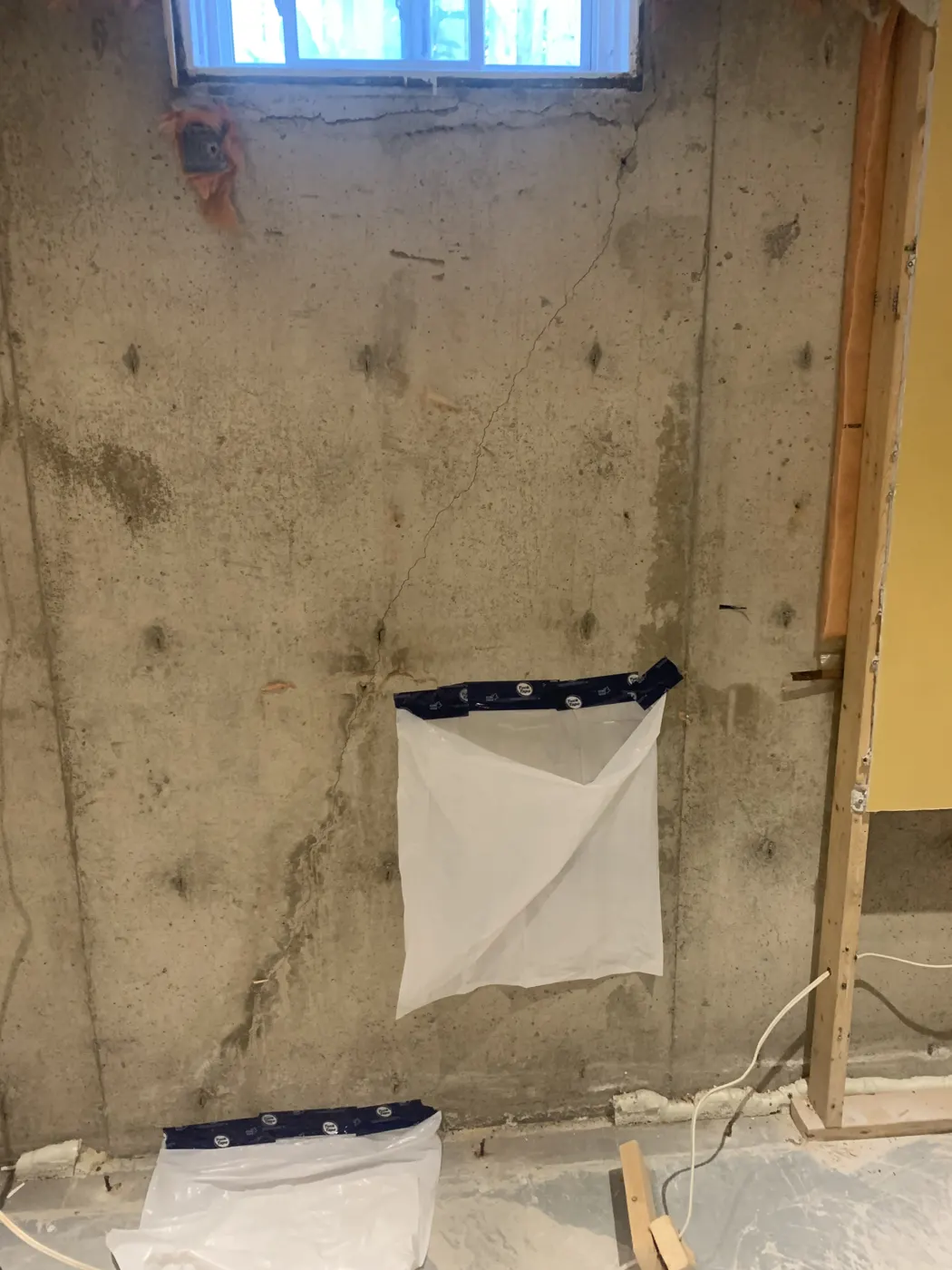
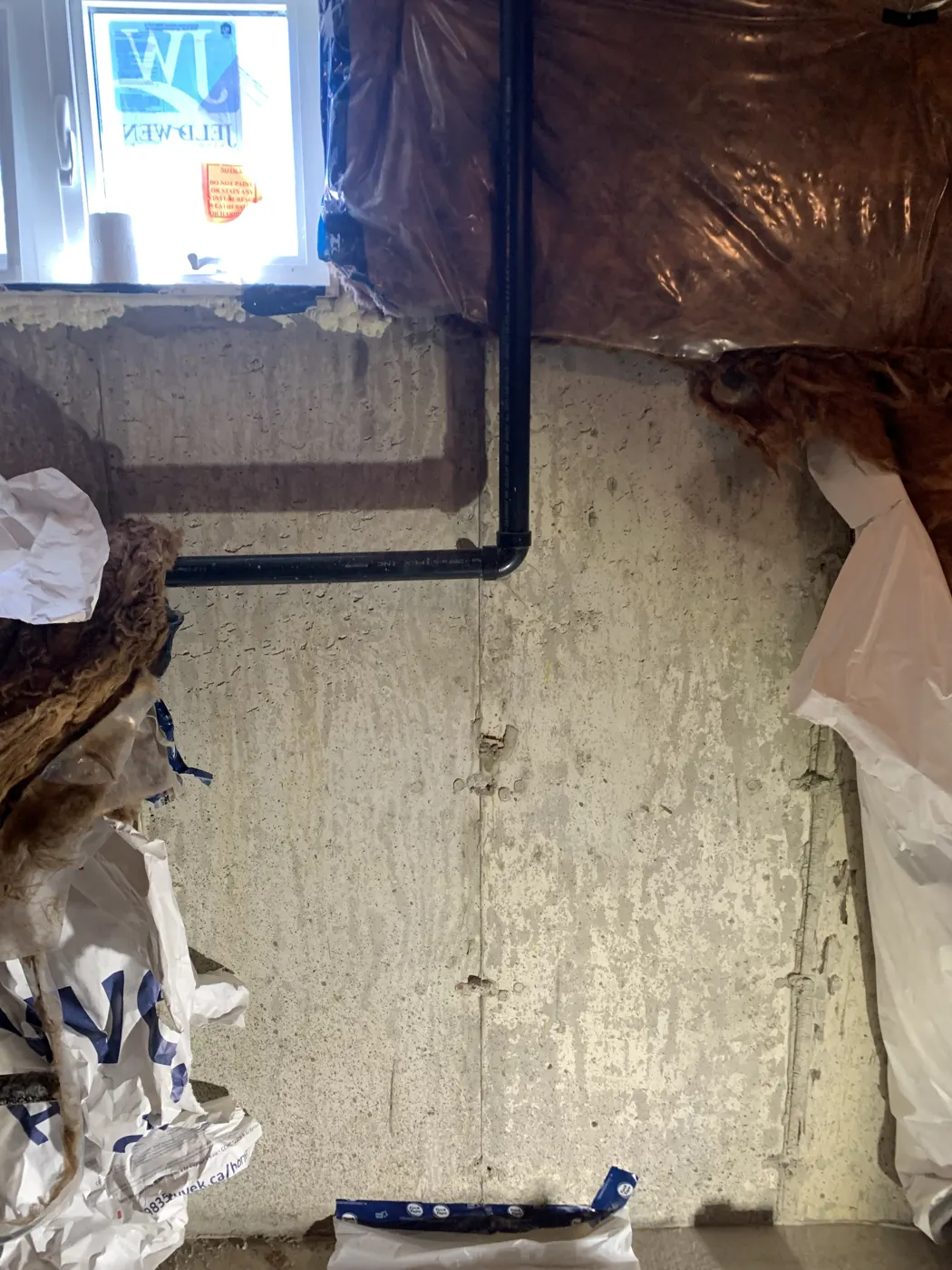
Wet — the calendar does not change the category. A crack that admits water once a year has a complete path through the wall, and meltwater pressure will keep using it. It belongs in the polyurethane row: the resin cures in the presence of water and stays flexible, so the repair works whether the crack is flowing on injection day or bone dry. Booking outside melt season just means easier scheduling.
Yes, and honestly: it is optional. A stable dry hairline carries no urgency, and monitoring costs nothing. The case for preventive injection is access — before drywall, insulation or storage make the wall expensive to reach — and permanence, since the repair is once-and-done under lifetime warranty. We will tell you plainly at the assessment which side of optional your crack sits on.
Stop and get a structural opinion before any repair. Horizontal cracking, particularly with inward bowing, indicates lateral soil pressure exceeding what the wall was built to resist — a structural condition, not a sealing problem. Injection may be part of the eventual fix, but only after an engineer defines the fix. Any contractor who quotes a horizontal, bowing crack sight-unseen for injection alone is answering a question nobody should ask yet.
Date-marked pencil ticks at both ends, a width reference at the widest point, and a photo — then compare quarterly and after each spring melt. Growth past the ticks, visible widening, new offset between the crack faces or fresh dampness all mean the category changed. This is the same baseline our assessors want to see, so your pencil marks make any future professional visit faster and more honest.
The white crystalline powder is efflorescence — minerals left behind by water evaporating out of the concrete. It is not mould and not harmful itself, but it is proof that moisture has moved through the crack, which places you in the wet-history row: polyurethane logic applies even if the surface is dry today. Mould is a separate concern that follows persistent moisture into adjacent materials, one more reason wet-history cracks get sealed rather than watched.
An unexplained crack invites conditional offers and inspection drama; a documented one rarely does. Either resolution works on paper: a monitoring log showing years of stability, or an injection backed by a transferable lifetime warranty the buyer inherits. What hurts is mystery. Home inspectors flag what they cannot explain, so the pencil-tick log from this page or the warranty certificate from a repair are both, in different ways, listing assets.
Behind this framework.
The triage matrix and monitoring method are our field standards, applied on assessments across Toronto, the GTA and Southern Ontario and current to the review date above. Crack-pattern interpretation follows standard practice for poured concrete foundations; prices are our published ranges. For the structural cases this page refers out, any licensed professional engineer in Ontario can provide the assessment.
Send photos or book the free assessment — we will place your crack in the framework honestly, including the row where you keep your money.