
Foundation Cracks
Vertical cracks are the most common crack in Ontario basements — and usually the least serious. How to read yours, what a permanent repair costs, and when the honest answer is to do nothing.
Written by the Concrete Crack Repair Pros field team · Reviewed by our senior injection technicians · Published October 13, 2026
Are vertical foundation cracks serious? Usually not. A vertical or near-vertical crack in a poured concrete wall is almost always shrinkage from the concrete curing — a water-entry risk rather than a structural one. What matters is width and moisture: under about 6 mm and dry, monitor it; leaking or damp, a one-visit polyurethane injection ($750–$1,000, transferable lifetime warranty) seals it full-depth. Wider than 6 mm, offset, or visibly growing — have it assessed before anyone sells you a repair.
Poured concrete shrinks as it cures, and it keeps adjusting to temperature and moisture for years afterwards. When that shrinkage stress finds a weak line — the middle of a long wall, the corner of a basement window, a spot where the pour paused — the wall relieves it with a thin vertical crack. Most GTA homes with poured foundations develop at least one within the first five years, and the pattern is so routine that Ontario’s new-home warranty program explicitly excludes normal shrinkage cracks from builder repairs.
The physics matter because they tell you what the crack is not. A vertical crack is the wall pulling apart slightly as it dries — not the soil pushing the wall inward. That inward pressure shows up as horizontal cracking or stair-stepping in block walls, which is a different conversation entirely. Clay-heavy soil across Toronto and the GTA does swell and shrink with the seasons, which can slowly work a vertical hairline wider, but the crack itself started as shrinkage in the vast majority of homes we open up.
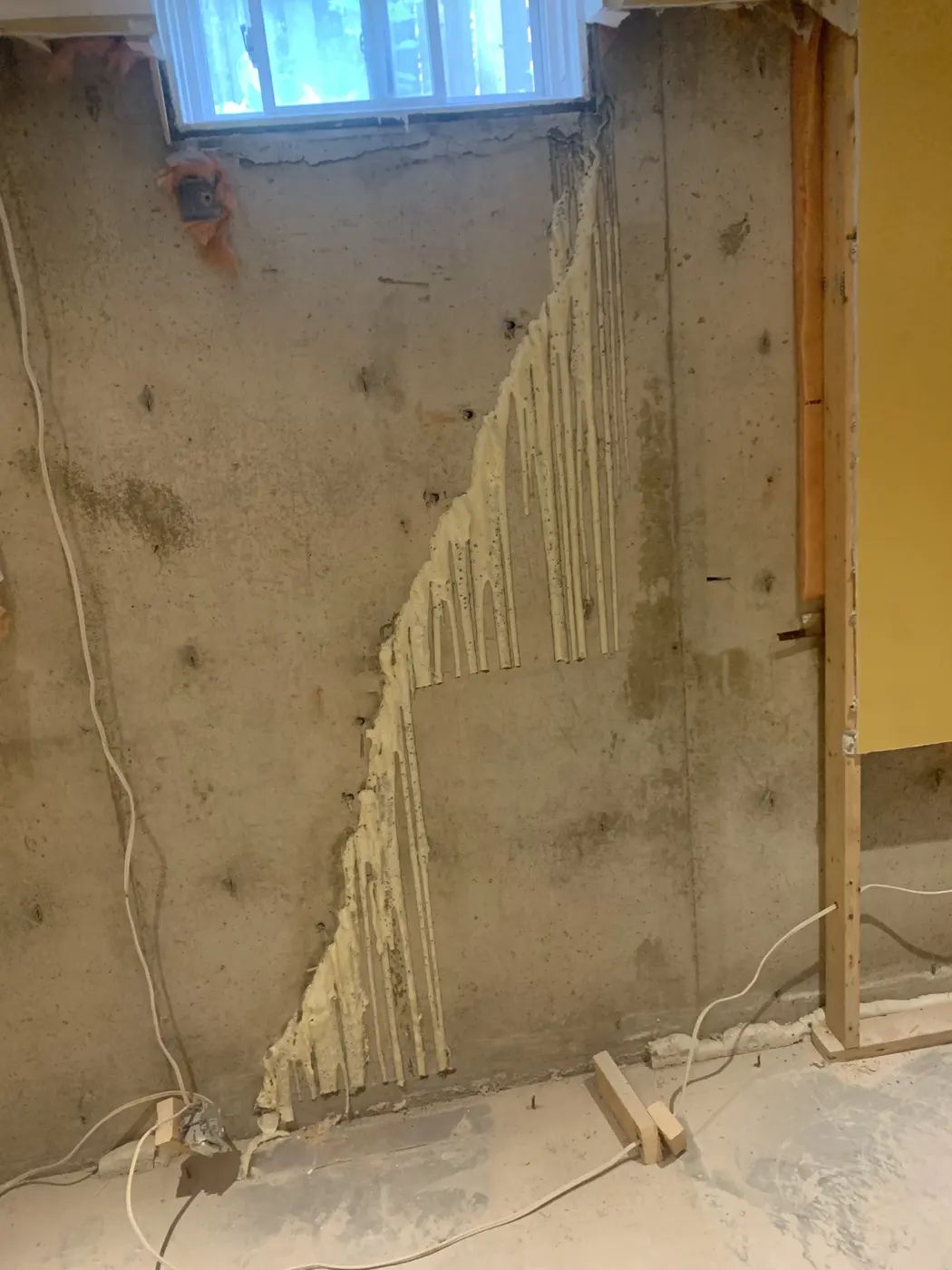
You can triage a vertical crack yourself in ten minutes with a tape measure and a flashlight. Width is the first filter — and Ontario’s own warranty thresholds are a useful yardstick for any home, not just new builds.
| What you measure | What it usually means | Sensible next step |
|---|---|---|
| Hairline, under 2 mm, bone dry | Normal curing shrinkage | Nothing. Pencil-date it, photograph it, re-check in 6 months |
| Under 6 mm, damp or leaks after rain/melt | Shrinkage crack that has become a water path | Injection — structurally minor but it will not seal itself |
| 2–6 mm and slowly widening season to season | Seasonal soil movement working the crack | Assessment, then injection with a flexible resin |
| Over 6 mm, or one face offset from the other | Possible settlement or movement beyond shrinkage | Structural assessment before any repair is sold to you |
For reference: Tarion requires builders to repair cracks wider than 6 mm in poured concrete walls, 2 mm in concrete block, and 4 mm in basement floors during the first-year warranty — and excludes normal shrinkage cracks below those widths. If your crack sits under those numbers, the province’s own standard treats the wall as performing normally; the live question becomes water, not structure.
A dry vertical hairline is a cosmetic note in a home inspection. The same crack carrying water after a storm is a different animal: hydrostatic pressure in saturated soil will push moisture through a gap thinner than a credit card, and a crack that “only leaks in the spring” is leaking at exactly the moment the soil is wettest. Left alone, a weeping crack keeps drywall damp, feeds humidity and musty smells, and stains everything it touches.
If you are not sure which kind you have, our guide to wet vs. dry foundation cracks walks through the evidence — efflorescence, staining tracks, seasonal timing — before you spend a dollar.
A vertical crack in a poured wall is the textbook case for interior injection: the crack is accessible from inside, runs full wall thickness, and seals in a single visit with no excavation. We inject polyurethane ($750–$1,000 per crack) where the crack is wet or subject to seasonal movement — it stays flexible and moves with the wall — and epoxy ($850–$1,500) where a rigid structural bond is the right call. Tie-rod holes run $75–$150, and every additional crack on the same visit is 5% off. Every injection carries our transferable lifetime warranty.
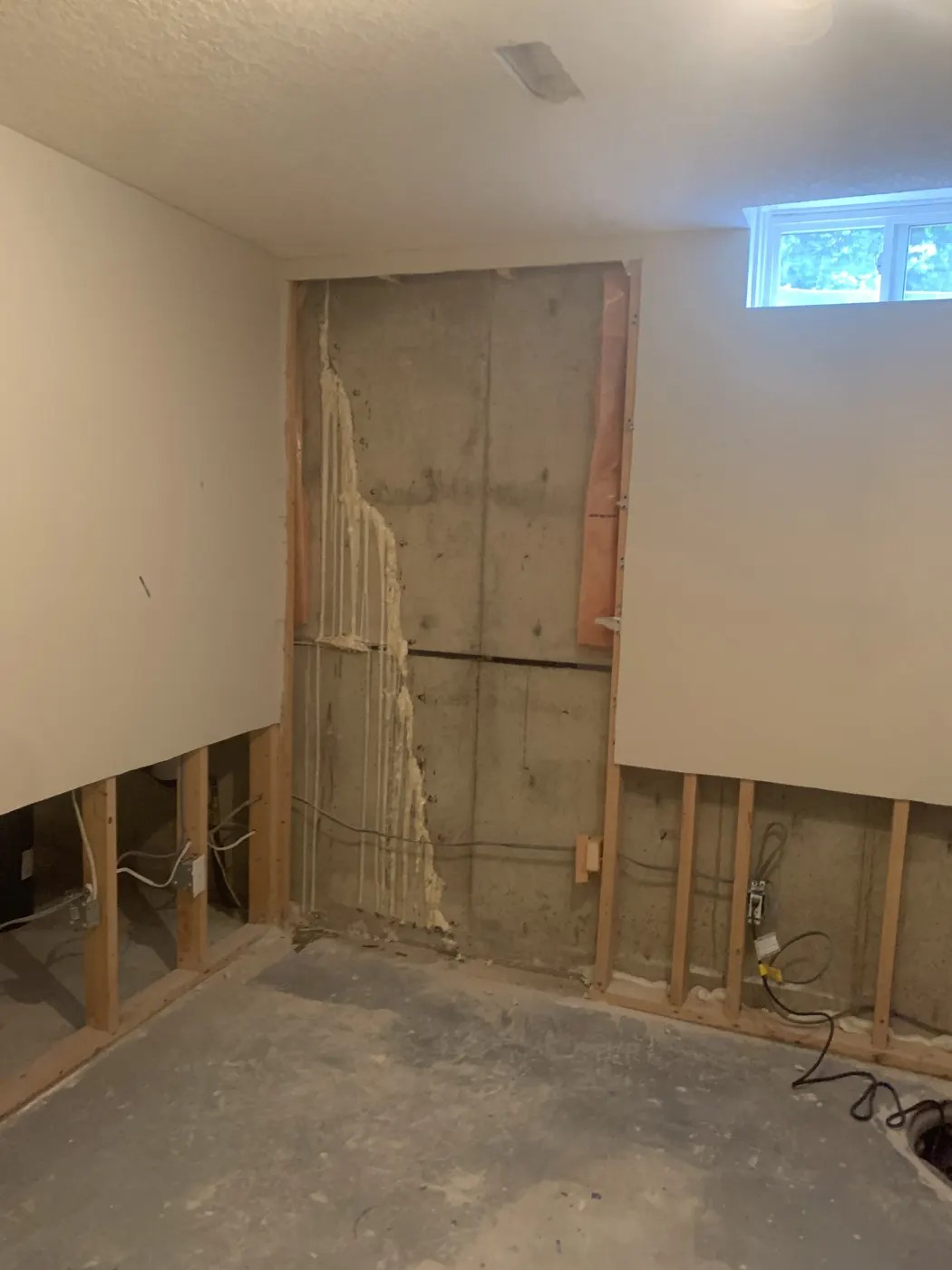
What we do not recommend is a surface patch: hydraulic cement or caulk bridges the face of the crack and leaves the full depth open, which is why patched cracks come back. The comparison is laid out honestly in patching vs. injection, and the full price logic in our crack injection cost guide.
A minority of vertical cracks deserve more than an injection quote, and we will tell you so on site. Treat these as assessment-first: one face of the crack sitting proud of the other (shear offset); a crack that is measurably wider at the top than the bottom, which can signal differential settlement; clusters of new cracks appearing after nearby excavation or a drought summer; or cracking paired with doors and windows starting to bind upstairs. None of these automatically mean structural repair — but they mean a professional should look before anyone sells you anything.
And the opposite case is just as real: a dry hairline that has not moved in years needs no contractor at all. Date it, photograph it with a coin for scale, and re-check it twice a year. If it ever changes or starts to weep, that is the moment to call — the price is the same either way, so nothing is lost by waiting on a dry, stable crack.
Live Google reviews for Concrete Crack Repair Pros, straight from our own Google Business Profile.
The questions we get asked on site, answered without the scare tactics and without the reassurance you have not earned.
iv class=”cca”>
Not always, but it carries a higher chance of being structural than any other crack direction. Vertical and diagonal cracks are usually shrinkage or settlement. A horizontal crack normally means lateral earth pressure — the soil pushing inward — which is a load problem rather than a water problem. The ones that are not serious are usually not cracks at all: pour seams, form lines, cold joints and rows of tie-rod holes all read as horizontal lines to an untrained eye. Establish which you have before assuming the worst, and before letting anyone seal it.
Send a photo or book a free written assessment. If your wall is straight and simply leaking, we will seal it. If it is moving, we will tell you to see an engineer before you spend money with anyone.